According to the AI MOMENTUM 2026 survey, conducted at the turn of 2025 and 2026 by the Czech Association of Artificial Intelligence and the Czech Chamber of Commerce among 1,033 Czech companies, roughly nine out of ten businesses are counting on artificial intelligence. Half of them already use or test it. But as usage grows, so does one quiet problem: the leaders of organizations often don’t know what is really happening with AI inside them.
Organizations are adopting AI faster than any technology before it
Yet they often have no idea what exactly is happening with AI inside them.
AI entered companies by a different route than every technology before it
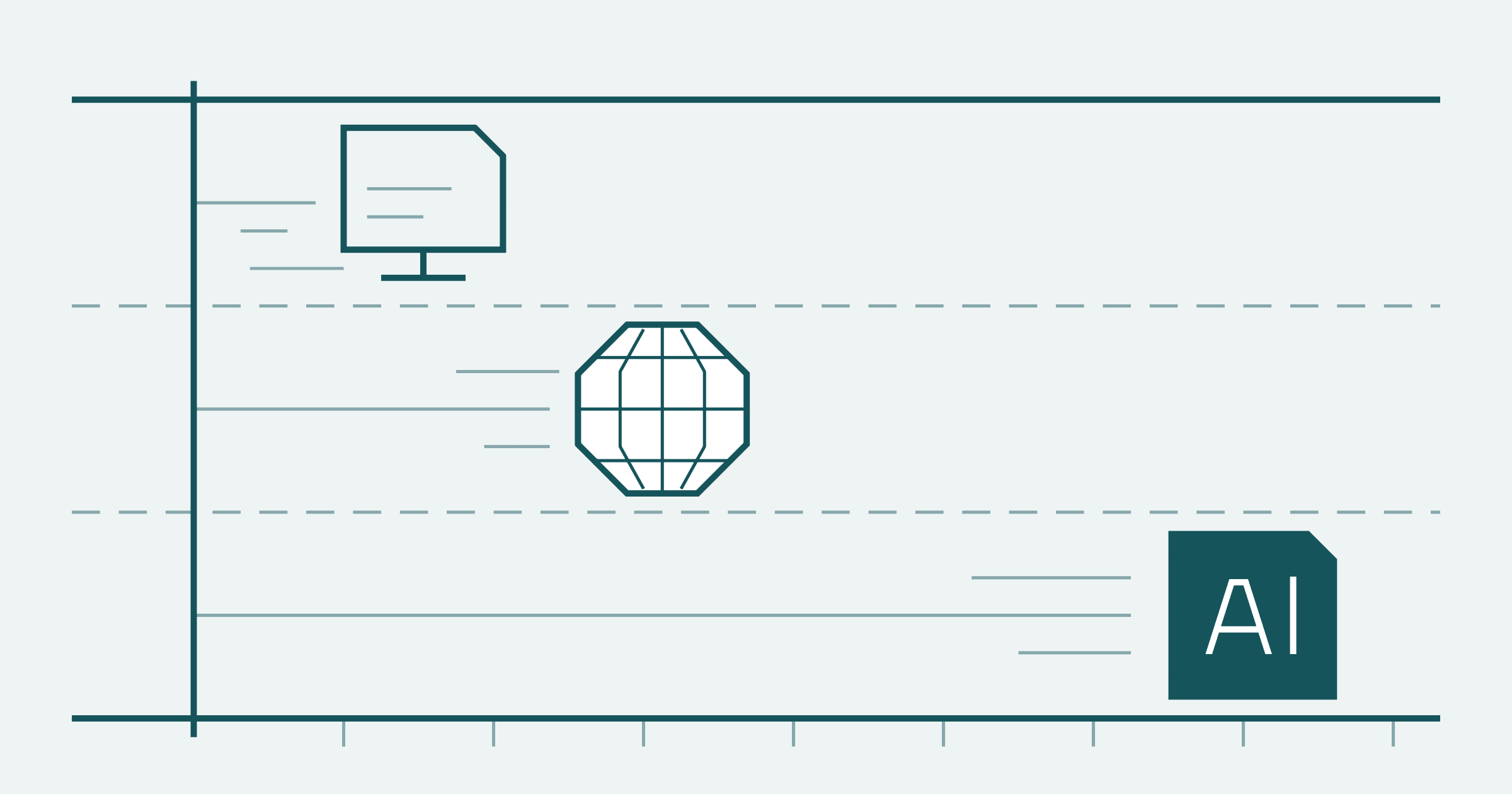
Organizations are adopting AI faster than any technology before it. Economists from the Federal Reserve Bank of St. Louis and Harvard compared the pace of adoption with personal computers and the internet and found that two years after its launch, generative AI had reached roughly twice the adoption rate the internet had at the same stage.
But organizations are not adopting AI the way they adopted earlier technologies: in a managed way, through the IT department, with a clear budget and owner. AI is entering companies from the top and from the bottom, through individual employees and teams, often without the knowledge of leadership or security teams.
The result is a situation that no previous wave of technology created on this scale: organizations often have no idea what is really happening with AI inside them.
The numbers reveal several blind spots
- Companies don’t know how much they actually spend on AI. According to the Flexera 2026 State of ITAM report, based on responses from more than five hundred technology professionals, only 31% of organizations have an accurate view of their AI software spending. At the same time, 59% of respondents say their wasted AI spending grew year over year.
- Leadership doesn’t know what AI delivers. A PwC survey of 4,454 CEOs from 95 countries, published in January 2026, found that 56% of them had seen neither significantly higher revenue nor lower costs from using AI over the past twelve months.
- Employees often hide their use of AI. A global study on trust in AI, conducted by the University of Melbourne with KPMG in 2025 among more than 48,000 people in 47 countries, found that 57% of employees hide their use of AI from their employer and present AI output as their own work.
- Data that should never leave the company is making its way into AI. In the same University of Melbourne and KPMG study, nearly half of employees admitted using AI in violation of company policy, including uploading sensitive company information to public tools, and two thirds said they do not check AI output in any way.
- AI-generated code contains bugs or vulnerabilities. Since 2025, Veracode has been continuously testing more than a hundred language models on standard programming tasks. According to its July 2026 report, roughly 44% of cases produce code with a security vulnerability, and this share has barely changed over a year of testing, even though models have become much better at writing code that works.
- And then there is regulation. Some of the obligations under the EU AI Act, mainly the transparency requirements, have applied since August 2026. The most demanding part, the obligations for so-called high-risk systems, was postponed by the European Union this summer until December 2027. But a postponement is not a pause. According to an IBM survey of two thousand technology leaders in 33 countries, 70% of them say that teams in their company deploy technology faster than IT can keep track of it, and without a record, you cannot even tell which systems fall under the regulation. Internal audits by the European consulting firm Vision Compliance at its clients in eight industries confirm this: 83% of organizations had no inventory of the AI systems they use, and 74% had no designated person responsible for compliance.
And this is only the beginning. AI agents are coming
Today, it is mostly about employees using chat tools. But the next wave is AI agents: systems that don’t just answer questions but act on their own. They write and deploy code, communicate with customers, carry out transactions, and make decisions.
Every problem organizations have today with visibility into AI will multiply with agents. A company that doesn’t know today what its people paste into a chat won’t know tomorrow what its AI agents are doing on its behalf.
The difference is where you can step in. With a chat, there is a person between the AI and the result who at least reads the output. With an agent running in the background for hours, there is no such natural checkpoint. An error doesn’t stop. It spreads through the entire process.
Where this leads if nothing changes
If this is not addressed, organizations are heading toward a point where a substantial part of their decisions, communication, and production runs on systems that no one inside the company fully understands and no one systematically monitors.
Costs will grow with no way to manage them.
AI errors will reach customers and production before anyone notices. AI-generated code may also contain third-party licensed content without anyone in the company knowing. That can mean a legal dispute or, in the worst case, being forced to publish your own code as open source.
And the list doesn’t end there. A company’s know-how can dissolve piece by piece into third-party tools. When the first serious incident or regulatory inspection comes, it will turn out that the company has no way to show what its AI did, why, and with what data.
The question is not whether you deploy AI, but how
Any company can deploy AI fairly quickly today. The question is whether six months later it can justify what it deployed and how.
If it can’t, that won’t be a failure of technology. It will be a failure of management.
And that is good news, because management can be fixed before anything happens. It starts with a boring but unskippable step: finding out which AI tools are really running in the company, who pays for them, and what data flows into them. Most organizations don’t have that list today. Those who do will gain an edge, and the rest is solvable.
Sources
- AI MOMENTUM 2026 (Czech Association of Artificial Intelligence + Czech Chamber of Commerce, in Czech)
- Bick, Blandin, Deming - The Rapid Adoption of Generative AI (NBER WP 32966; also in Management Science, 2026)
- Flexera 2026 State of ITAM Report
- PwC 29th Global CEO Survey (January 2026)
- University of Melbourne & KPMG - Trust, attitudes and use of AI: A global study 2025
- Veracode 2026 GenAI Code Security Report (July 2026)
- IBM IBV - CIOs and CTOs Face Growing AI Control Gap (June 2026)
- Vision Compliance - 2026 EU AI Act Readiness Report (press release, April 2026)
- AI Act - Digital Omnibus, Regulation (EU) 2026/1744 (overview of the new deadlines) - for the primary text, search EUR-Lex for 2026/1744