Asysta Board gives an organization’s leaders one place to see what is happening with AI across the organization: what it costs and what the company gets for it, who actually uses it, whether sensitive data is flowing into it, how AI-assisted development is going, and whether the organization has the records it would need for an audit. We originally built the tool for ourselves. Starting today, we’re offering it to others too.
Introducing Asysta Board: a dashboard for AI adoption
One place where leaders can see what AI costs, who uses it, and what data flows into it.
We built it for executives, business owners, and AI leaders who are responsible for rolling out AI. It suits organizations that are just starting with AI and want visibility from day one, as well as those that already use it and need to bring it more under control.
Why we built it
We’ve looked in detail at why leaders today often manage AI blind in two earlier articles: Organizations are adopting AI faster than any technology before it and Leaders often manage AI blind, yet they carry the greatest responsibility. In short, AI enters organizations both from the top and from the bottom, and it touches finance, security, how teams work, and IT development all at once. Organizations have oversight built for each of these areas separately, but they usually lack a single view of how AI plays into them.
We ran into the same problem ourselves once we started using AI at scale. We run our company on numbers from the systems we work with. For AI, there were no such numbers. So we used the Asysta platform, originally a general-purpose one, to build the tool we needed. It has been running in our own company for a few months now.
Four dashboards for leaders
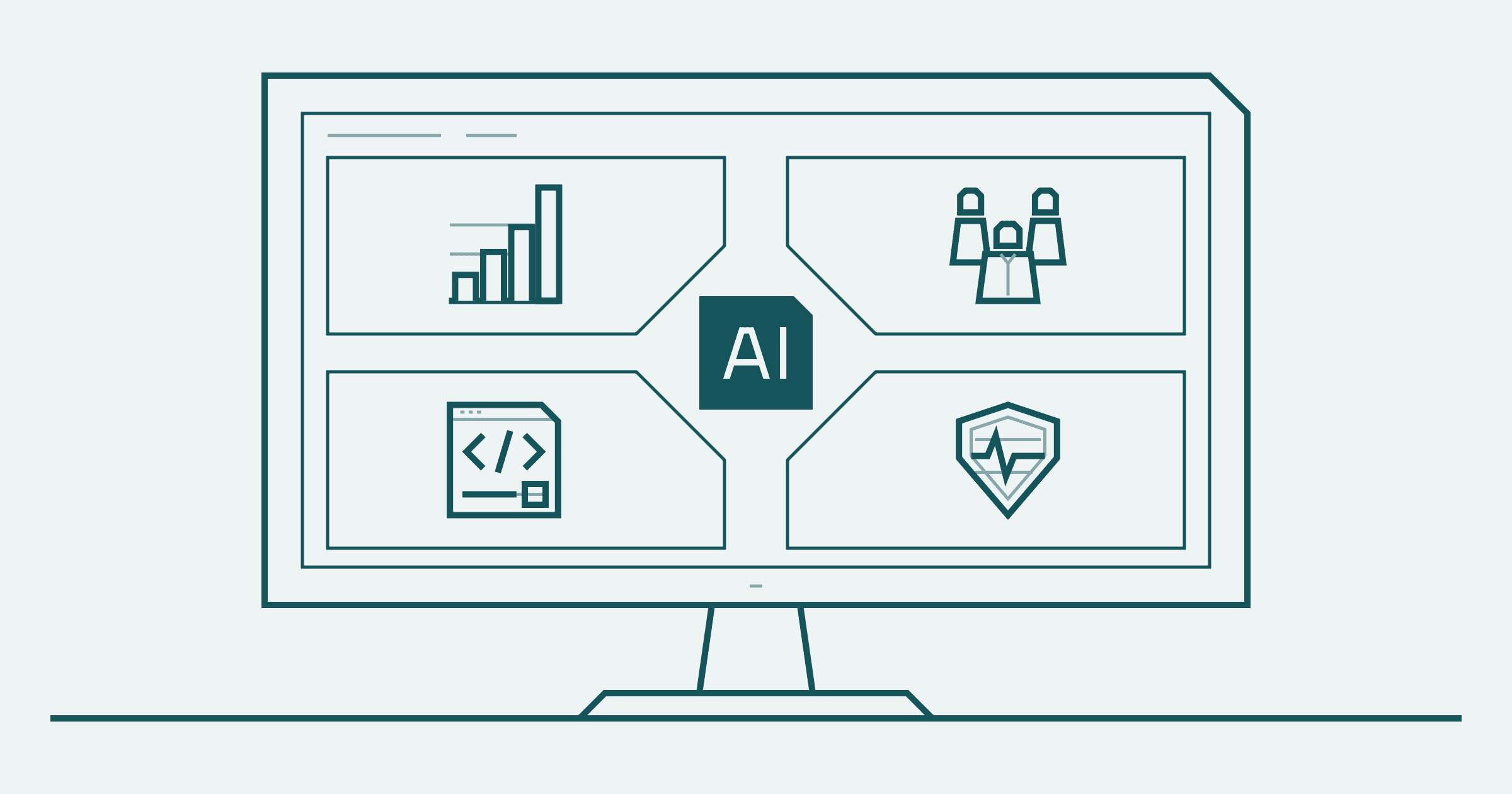
The foundation is four preconfigured dashboards. Each one answers the questions leaders usually ask about AI:
- Financial dashboard. How much the organization spends on AI, where costs are growing fastest, and whether they match the value of individual projects.
- Security dashboard. Whether strategic information, passwords, or customers’ personal data are ending up in AI tools, and whether AI has gained access to systems it shouldn’t have.
- People dashboard. How individual teams use AI, where adoption is stalling, and where the company is paying for a tool nobody uses.
- Developer dashboard. Whether AI helps development deliver more finished work, how many bugs the code it writes contains, and how often that causes something to break in production.
We designed the dashboards for people without a technical background. Just as financial statements aren’t read only by accountants, an overview of AI can’t be something only a data engineer understands. Leaders carry the responsibility, so the tool has to speak their language.
What a dashboard doesn’t tell you, the AI assistant will
At the heart of all these dashboards is an AI assistant you can ask questions in plain language. It helps explain what the numbers mean, find the cause when something doesn’t add up, and suggest a fix. With its help, you can also easily adjust a preconfigured dashboard or create a new one, using plain-language instructions, in a matter of minutes, without consultants and without a lengthy data project.
From visibility to control
A “dashboard” alone doesn’t solve anything, though. That’s why Asysta Board doesn’t stop at dashboards. Optional add-on modules help you find unnecessary costs, uncover inefficient work by AI agents, catch development problems before they reach production, set your own rules for where AI is allowed to go, and continuously build documentation for audits. You can add them at any time later, once you see a concrete benefit. You’ll find an overview of the modules on the Asysta Board page.
Where Asysta Board gets its data and how we deploy it
Modern AI tools can continuously send records of what they do, some in more detail, others in less. Where the records aren’t enough, we fill them in from other data the tool stores. Most organizations don’t collect these records anywhere. Asysta Board brings them together in one place and turns them into dashboards. That’s why we don’t start with a big data project, and we don’t interfere with how your teams work.
Deployment takes three steps. In an initial consultation, we go through how you work with AI and which tools you use. Then we connect the data sources. For common tools, this is a setting in one place, and for others we can build a custom integration if you’re interested. Finally, we fill the dashboards with your data, set them up to match your organization’s structure, and verify together that the numbers add up.
Asysta Board monitors company systems and tools, not employees’ personal devices or private communication, and it handles data in compliance with the GDPR. And because with AI the biggest question is often not functionality but trust and control over data, the whole solution can also run on the organization’s own infrastructure. No data ever leaves it.
What it adds to AI vendors’ own dashboards
AI tool vendors offer their own usage dashboards. But each of them mainly shows its own tool. Asysta Board builds a picture from all the tools the organization uses, and we can add your own data to it too, such as project budgets, so you can compare costs with value.
Who’s behind it
Asysta Board is built on our Asysta platform for visualizing and analyzing relationship data. We develop it at CEOS Data, a Czech company that has been building software for more than 15 years and whose solutions are used today by more than 4.5 million users in 7 countries. On the same platform, we also built the solution that the National Organized Crime Agency (NCOZ) uses to uncover financial crime.
If AI is growing faster in your organization than your view of it, book a free consultation. We’ll show you how Asysta Board runs in our company and go through what would make sense in yours.